Why the UAE Luxury Spa Market Is Projected to Hit USD 2.8 B by 2030 — And What That Means for You
A New Horizon in Wellness: The Numbers Speak
In the heart of the UAE’s luxury ecosystem, wellness is no longer an afterthought — it’s the ambition. According to Grand View Research, the UAE luxury spa market is forecast to reach USD 2,800.7 million by 2030, expanding at a compound annual growth rate (CAGR) of 8.6 % from 2025 to 2030. Grand View Research
That makes this market more than just “booming.” It’s entering a phase of maturation, premiumization, and elevated client expectations. For spa-owners, wellness strategists, and discerning spa-goers alike, the implications are profound.
In this article, we will:
- Validate and contextualize that projection
- Unpack the key drivers propelling this growth
- Examine what it means for luxury spa brands and clientele
- Highlight risks, caveats, and tactical steps you can act on today
1. Validating the Outlook: Projections & Industry Context
UAE’s Luxury Spa Forecast
- Grand View frames the base market in 2024 and forecasts USD 2,800.7 million by 2030, with 8.6 % CAGR during 2025–2030. Grand View Research
- In 2024, the market size is estimated at USD 1,703.4 million in their model. Grand View Research
Regional Benchmarks & Broader Spa Trends
- For the Middle East & Africa (MEA) region, the luxury spa market is projected to hit USD 9,440 million by 2030, at ~8 % CAGR. Grand View Research
- A combined KSA & UAE spa market report places a base of USD 1.9 billion (2024) for the two markets together and forecasts growth to USD 4.3 billion by 2034 (CAGR ~8.4 %). Global Market Insights Inc.
- Globally, the spa market is also growing: Mordor Intelligence estimates the global spa industry will move from USD 155.25 billion in 2025 to USD 211.71 billion in 2030 (CAGR ~6.4 %). Mordor Intelligence
- On spa services specifically, projections indicate growth from USD 160.78 billion in 2025 to USD 236.35 billion by 2030 (CAGR ~8.01 %). Knowledge Sourcing
Takeaway: The UAE’s projected 8.6 % growth sits slightly above global averages and aligns neatly with regional expansion, signaling robust opportunity if the offering is premium, differentiated, and executed well.
2. What’s Fueling the Surge? Key Growth Drivers
a) Affluent Demographic & Spending Power
The UAE continues to attract high-net-worth individuals, global executives, luxury travelers, and elite residents. As wealth accumulates, demand for exclusive, high-touch wellness experiences naturally follows.
b) Wellness-as-Destination: Tourism, Retreats, & Spa Tourism
The UAE is a global tourism hub. Urban retreats, resort spas, destination wellness getaways, and integrated hospitality developments are increasingly weaving spa experiences into their DNA. Wellness tourism becomes a major revenue engine.
c) Premiumization & Experience Differentiation
Consumers no longer settle for standard massages. They expect:
- Immersive, multi-sensory journeys (sound, scent, light)
- Technology-infused treatments (LED, cryotherapy, biometrics)
- Customization and data-driven personalization
Spas that fail to evolve become commoditized.
d) Government & Infrastructure Investment
The UAE government’s push for tourism, hospitality, culture, and luxury ecosystems (e.g. Expo developments, destination resorts, city expansions) is fertile ground for premium spa operators.
e) Preventive, Longevity-Driven Wellness Mindset
Wellness is shifting from indulgence to necessity. Clients want therapies that support anti-aging, recovery, stress resilience, immune health, and holistic balance.
f) Competitive Pressure & Innovation Curve
As the sector matures, only those who embed continuous innovation (treatment R&D, service design, staff capabilities) will sustain premium margins.
3. What It Means for Luxury Spa Brands (Your Strategic Playbook)
3.1 Positioning & Differentiation: Signature Narratives & Rituals
You can no longer be "just another spa." Your brand must carry a narrative — whether heritage, botanical sourcing, desert medicine, or scientific lineage — and design signature rituals that cannot be replicated easily.
3.2 Scalability Without Dilution
Growing to multiple branches (Dubai, Abu Dhabi, Ras Al Khaimah) is an advantage — if you maintain service consistency, training rigor, and operational quality across locations.
3.3 Hybrid Models: Tech + Human, Data + Intuition
Winning spas will embed diagnostics, treatment algorithms, biometric feedback loops, and AI-powered personalization — but still deliver human warmth, intentional touch, luxury ritual.
3.4 Place, Ambience & Architecture Matter
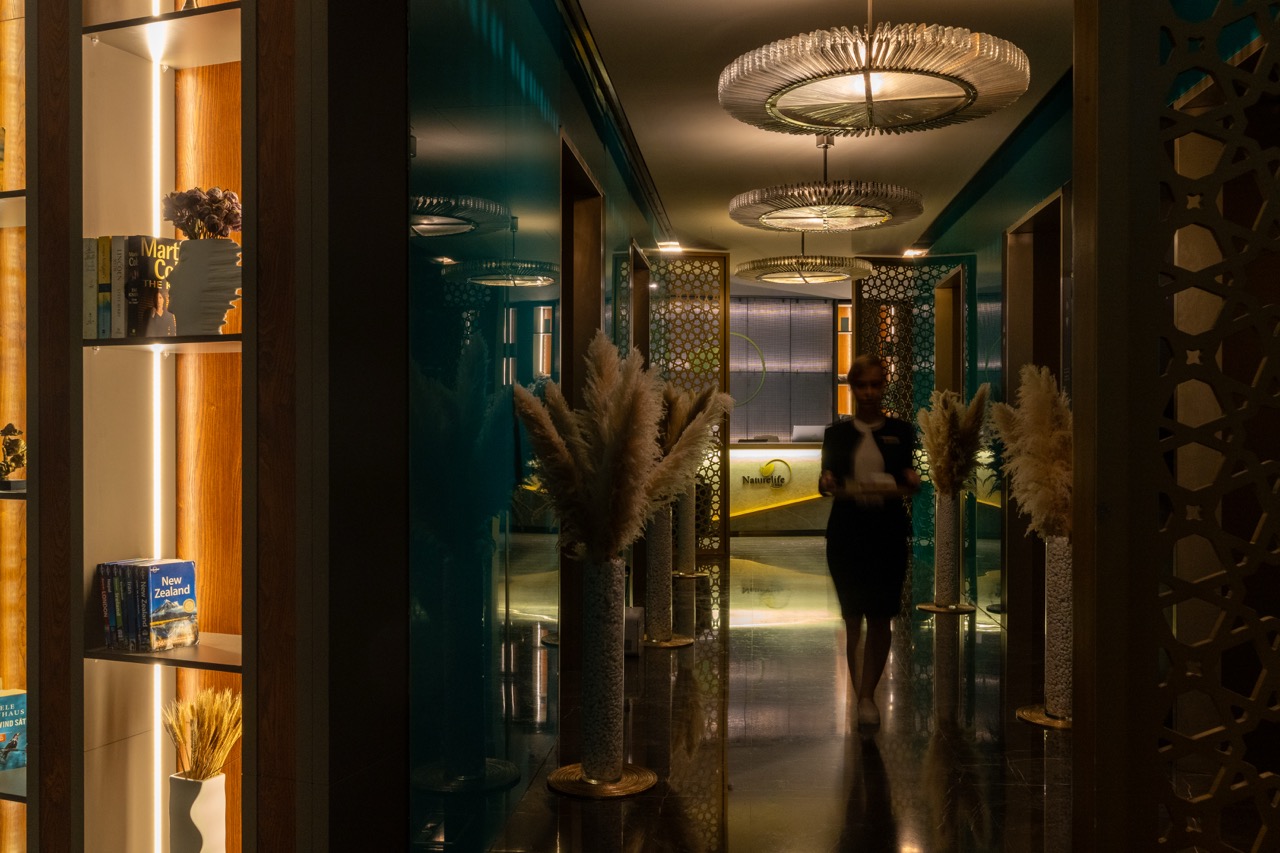
Luxury clients often choose spas for the environment and spatial psychology. The location (resort, city, desert enclave), interior architecture, materials, and sensory cues should serve the brand story.
3.5 Loyalty Models, Membership & Client Lifetime Value
With premium pricing, recurring relationships via memberships, seasonal rituals, and loyalty tiers are essential to stabilize revenue and deepen client engagement.
4. What It Means for Discerning Clients (You, as the Spa-Goer)
- Elevated expectations: You’ll see more transparency in ingredient sourcing, protocols, and the science behind treatments.
- More integrated offerings: Expect wellness packages combining spa, diagnostics, nutrition, sleep coaching, and medical wellness.
- Tiered exclusivity: Private suites, invitation-only rituals, “members-only” access and limited appointment windows become standard.
- Investment mindset: Clients will be willing to pay premium fees, provided the perceived value exceeds the cost — excellence, uniqueness, atmosphere, efficacy.
5. Risks & Caveats: What Could Derail the Growth Story
- Saturation & competition creep: As more spa concepts emerge, differentiation becomes harder and margin compression may occur.
- Talent scarcity: Skilled therapists, wellness scientists, biomedical staff, treatment innovators will be in short supply — staff development is a critical investment.
- Economic fluctuations & luxury pullback: Premium services tend to be among the first cutbacks in tighter economic environments — brand resilience matters.
- Regulation, health compliance, credentials: Mistakes in licensing, hygiene, safety protocols, or misleading claims can damage reputation irreparably.
- Overextension: Expanding too rapidly without strong core brand consistency can fragment quality and erode brand prestige.
6. Tactical Steps You Can Take Right Now
- Define or refine your signature ritual(s) that connect the local context (Arabian therapies, desert botanicals) with modern science.
- Audit your service infrastructure — staff training, protocols, quality assurance — to ensure consistent luxury delivery across branches.
- Pilot data-driven personalization — integrate wellness assessments, client profiling, biometric feedback, or digital touchpoints.
- Design membership or subscription models that anchor clients long-term and increase lifetime value.
- Craft narrative-rich content marketing (blog posts, visuals, behind-the-scenes) to build authority and educate prospective clients.
- Monitor KPIs at branch level (treatment performance, uptake, retention, staff utilization) and double down on what outperforms.
Final Thoughts: The 2030 Vision Is Alive Today
The projection of USD 2.8 billion by 2030 is not a distant mirage — it is already rippling through the UAE spa landscape. For thoughtful, high-end spa brands willing to invest in narrative, operational discipline, innovation, and client-centricity, this growth is your stage.
Whether you're a spa founder, wellness investor, or connoisseur of luxury wellness — as the market accelerates, the question becomes not if you will engage, but how deeply and distinctively.
Curious how this forecast maps onto our latest signature rituals and memberships? Contact us for a bespoke wellness consultation.